High-Curcumin Turmeric: The Complete Buyer's Guide to Sourcing Premium Indian Turmeric
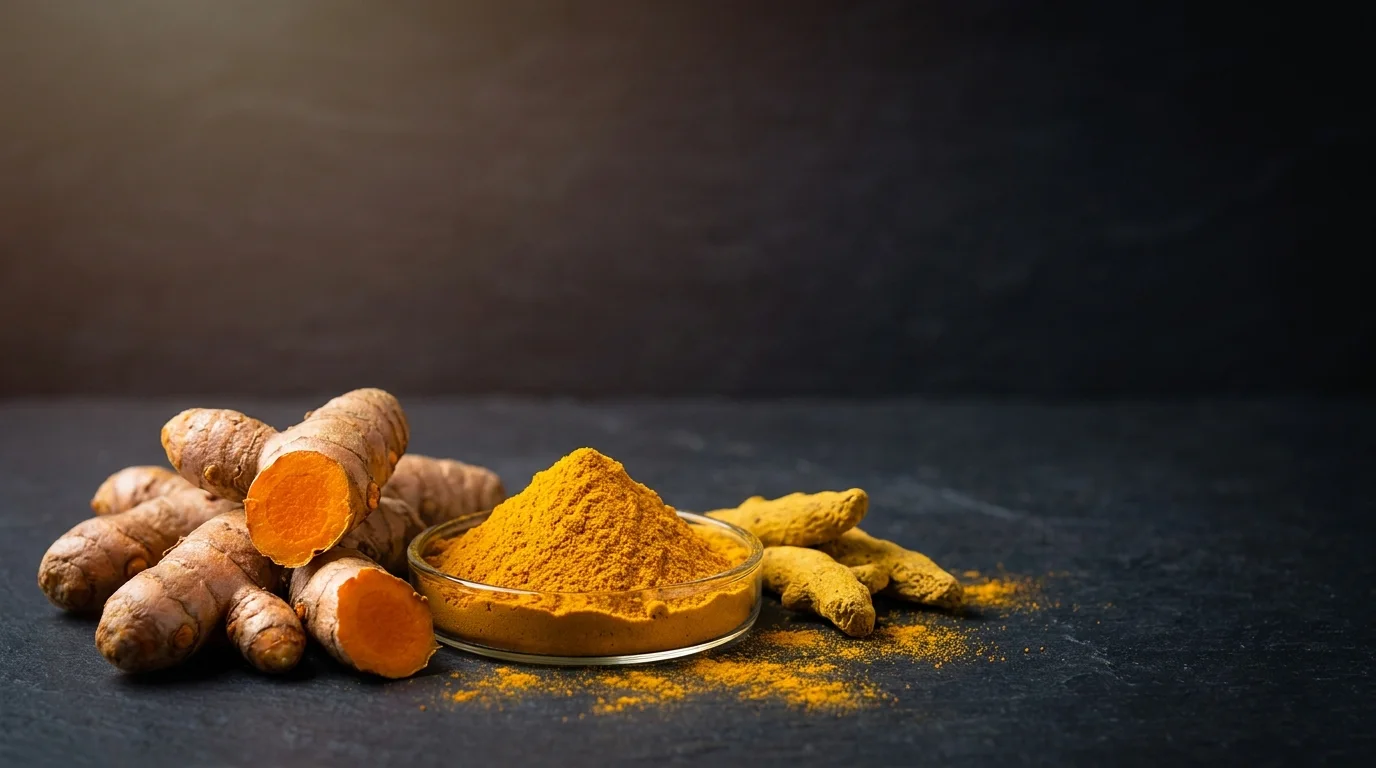
When a wellness brand, ayurvedic house, or food manufacturer searches for turmeric today, they are rarely searching for a colour or a flavour alone. They are searching for a molecule: curcumin. Curcumin is the principal curcuminoid in *Curcuma longa*, and it is the compound that gives premium turmeric its commercial value in nutraceuticals, functional foods, and clean-label supplements. Yet 'high-curcumin turmeric' is one of the most loosely used phrases in the global spice trade — and one of the easiest places for a buyer to overpay for an ordinary lot.
This guide explains what high-curcumin turmeric actually is, why the curcumin percentage matters to your margins and your label, how content varies by cultivar and growing region, and — most importantly — how to verify a supplier's claims before money changes hands. It is written for the people who buy turmeric for a living: importers, formulators, blenders, and procurement teams who need certainty, not folklore.
What does 'high-curcumin turmeric' actually mean?
Turmeric's golden colour comes from a group of compounds called curcuminoids, of which curcumin (more precisely, curcumin I) is the most abundant and most studied. Ordinary culinary turmeric powder sold in bulk markets often sits around 2–3% curcumin. 'High-curcumin' is a relative, commercial term — but in practice, serious buyers use it to describe turmeric assayed at roughly 4% curcumin and above, with the most sought-after single-origin material reaching 5–7% or higher.
Two things follow from this. First, a higher curcumin percentage means more active compound per kilogram, which matters enormously if you are standardising an extract or making a potency claim. Second, because curcumin content is invisible to the eye, the only way to know what you are buying is to test it. A deep orange colour is a marketing cue, not a measurement.
Curcumin content by cultivar and region
India grows dozens of turmeric varieties, and the curcumin range between them is wide. A few names recur in any serious sourcing conversation:
- Lakadong (Meghalaya) — celebrated as one of the highest-curcumin cultivars in the world, often assayed in the 6–7%+ range. Genuine Lakadong is limited in volume and commands a premium.
- Erode and Salem (Tamil Nadu) — historic, high-quality turmeric belts known for consistent colour and curing tradition; a backbone of the Indian turmeric trade.
- Sangli (Maharashtra) — one of Asia's largest turmeric trading hubs, valued for hard, well-cured 'fingers' with strong colour.
- Nizamabad / Rajapuri and other regional types — widely traded culinary grades with curcumin typically in the lower band.
Curcumin is not fixed by genetics alone. Soil mineralogy, altitude, rainfall, the maturity at harvest, and — critically — the curing and drying process all influence the final assay. Two lots of the same cultivar can test differently. This is exactly why single-origin, lot-level traceability matters: it lets you connect a curcumin number to a specific field and a specific harvest, not a blended average.
Why the curcumin percentage matters to buyers
For a culinary brand, a one-point difference in curcumin may be irrelevant. For a nutraceutical or extract buyer, it is the whole economics of the deal:
- Extraction yield. Curcumin extractors and standardised-extract makers care about input potency because it drives yield per tonne. Higher-curcumin raw material can mean fewer kilograms processed for the same output.
- Label and potency claims. If your product states a curcuminoid content, your raw material must support it lot after lot. Variability is a compliance risk.
- Price benchmarking. Paying a 'premium' price for ordinary-curcumin turmeric is a common, avoidable loss. The fair price is the one justified by the assay, not the adjective on the offer sheet.
- Bioavailability strategy. Curcumin is famously poorly absorbed on its own; many formulations pair it with piperine (black pepper extract) or use specialised delivery systems. Knowing your starting potency is step one of any such formulation.
A note on health claims: curcumin has been the subject of a large and growing body of research, and turmeric has been used in Ayurveda for centuries. But responsible suppliers and brands should describe it as a traditionally valued, well-studied botanical — not a treatment for any disease. E-E-A-T and regulatory good practice both reward caution here.
How to verify curcumin content (don't take it on trust)
The single most useful habit a turmeric buyer can build is to make every claim provable. Before you commit to a supplier, ask for the following — and read them, not just collect them:
- A lot-specific Certificate of Analysis (COA). Not a generic, year-old document — a COA tied to the actual lot you would receive, ideally with curcumin measured by HPLC.
- The test method. HPLC is the credible standard for curcuminoid quantification. Be wary of 'colour value' (ASTA/Curcumin colour) being presented as if it were curcumin percentage; they are related but not the same.
- Contaminant and safety data. Moisture, ash, lead and heavy metals, pesticide residues, and microbiology. High curcumin means nothing if the lot fails on safety.
- Traceability. Region, cultivar, harvest period, and lot number. Single-origin material should be able to tell you where it came from.
- A sample, then a retest on arrival. Qualifying buyers should test an incoming sample independently and reconcile it against the supplier's COA.
The colour sells the bag. The COA sells the contract. Buy on the number, not the hue.
Whole turmeric vs powder, polished vs unpolished
Buyers frequently ask whether to import whole 'fingers' or ready-milled powder. Whole, cured fingers travel and store well, retain volatile character longer, and let you control your own milling and particle size — useful for extract houses and large blenders. Powder offers convenience and immediate usability for packers and culinary brands, but demands tighter control over freshness, particle size, and microbiology. 'Polished' vs 'unpolished' refers to post-curing surface treatment of fingers; the choice is largely about appearance and downstream handling. The right answer depends entirely on your process — which is a conversation worth having with a supplier before you order, not after.
Whatever the format, request the specification in writing: curcumin %, moisture, mesh size for powder, colour value, and the safety panel. A supplier who can speak this language fluently is usually a supplier who controls their quality.
A premium-turmeric sourcing checklist
- Define your target curcumin band and your hard limits (moisture, heavy metals, pesticides).
- Ask for single-origin, lot-level traceability and an HPLC COA for the exact lot.
- Request a lab-tested sample; test it independently before scaling.
- Confirm the supplier's export readiness — documentation, packaging, and Incoterms.
- Agree retest-on-arrival tolerances in the contract.
- Start with a manageable lot, build the relationship, then scale volume with confidence.
Where Swanandi Spices fits
Swanandi Spices is an FSSAI-licensed, IEC-registered Indian turmeric and spice exporter built around exactly this kind of rigour: single-origin, traceable material that is assayed for quality, with Certificates of Analysis, lab reports and lot histories shared on request. For buyers who need certainty about potency, safety, and supply, we map the right cultivar and grade to your specification rather than selling a one-size-fits-all bag. If you are building a high-curcumin product line, the next step is a sample and a spec conversation — see our export and B2B terms for documentation, MOQ, and shipping details.
Tell us your target curcumin band and we will propose the right lot, with a lab-tested sample for qualifying buyers.
REQUEST A TURMERIC SAMPLE →What is a good curcumin percentage for turmeric?
Ordinary culinary turmeric often tests around 2–3% curcumin. Buyers describe turmeric as 'high-curcumin' at roughly 4% and above, with premium single-origin cultivars such as Lakadong reaching 6–7% or higher. The right target depends on your application — culinary, nutraceutical, or extraction.
How is curcumin content measured?
The credible method is HPLC (high-performance liquid chromatography), reported on a lot-specific Certificate of Analysis. Be careful not to confuse curcumin percentage with 'colour value' (ASTA/curcumin colour), which is related but measures appearance rather than curcuminoid content.
Which Indian region has the highest-curcumin turmeric?
Lakadong turmeric from Meghalaya is widely regarded as one of the highest-curcumin cultivars, often in the 6–7%+ range. Tamil Nadu's Erode and Salem belts and Maharashtra's Sangli hub are also prized for quality and consistency.
How can I verify a turmeric supplier's curcumin claim?
Ask for a lot-specific HPLC COA, a safety panel (moisture, ash, heavy metals, pesticides, microbiology), and full traceability, then test an incoming sample independently and agree retest-on-arrival tolerances in your contract.