Private-Label and Bulk Spice Sourcing: How Global Brands Partner with Indian Manufacturers
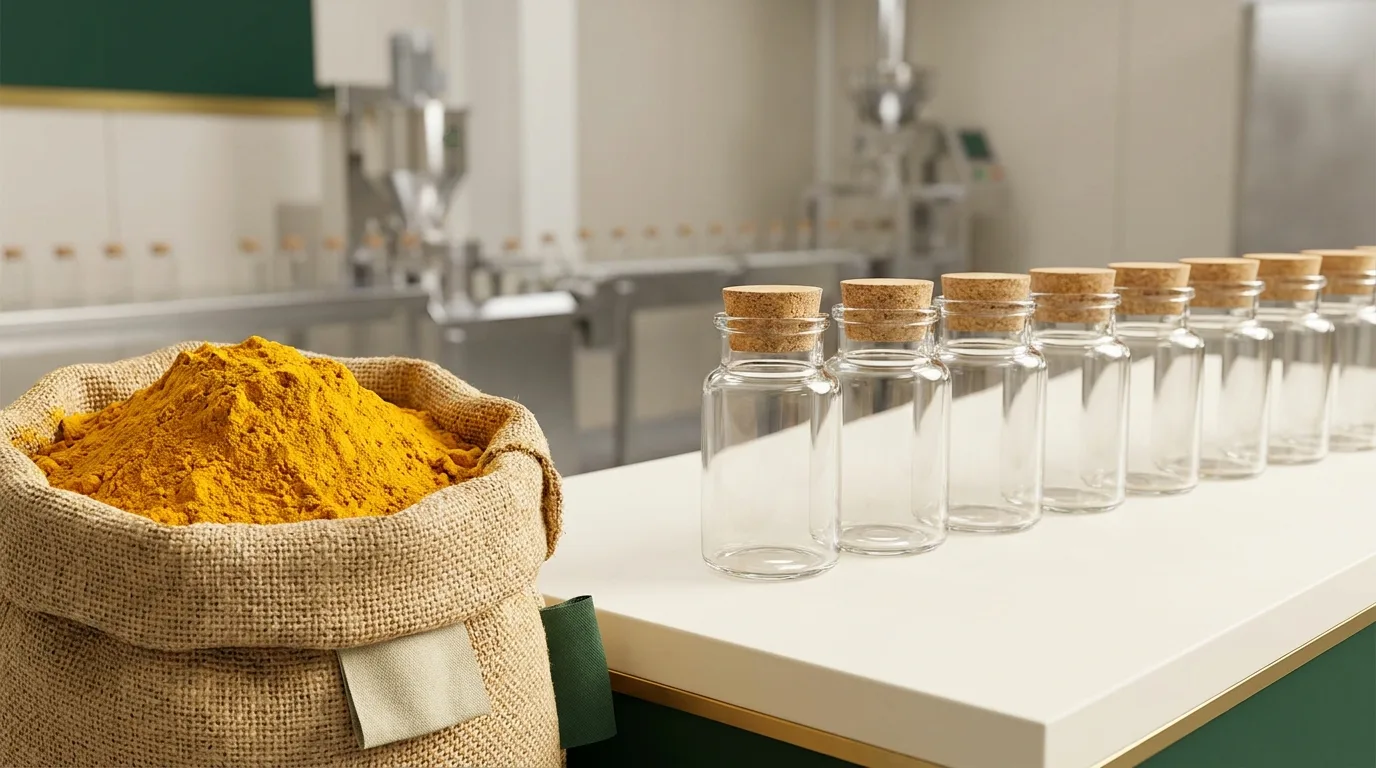
Behind a surprising number of premium spice and turmeric brands on shelves and storefronts around the world sits a quiet truth: they do not own a farm or a factory. They own a brand, a customer relationship, and a standard — and they partner with a manufacturer to make the product. Private-label (white-label) and bulk sourcing from India is how a wellness brand, retailer, or food business launches a credible spice line without the capital and complexity of building production from scratch.
This guide explains how private-label and bulk spice sourcing actually works, what to expect on MOQ and quality control, the documentation that protects you, and — most importantly — how to choose a manufacturing and export partner you can rely on order after order.
Private label vs bulk: which do you need?
These two models are often confused, but they solve different problems:
- Bulk supply means you buy spices in large, unbranded quantities — sacks of turmeric powder or fingers, for example — and do your own packing, blending, or further processing downstream. Ideal for blenders, repackers, foodservice, and extract houses.
- Private label (white label) means the manufacturer produces a finished product to your specification and your branding — your blend, your pack size, your label — ready to sell. Ideal for brands and retailers who want a market-ready product without running production.
Many brands start with bulk to learn a product, then graduate to private label as they scale and want a finished, branded SKU. A good partner can support both paths.
How private-label spice manufacturing works, step by step
- Brief and specification. You define the product — single spice or blend, curcumin target, particle size, pack format, label claims, and target market.
- Sampling. The manufacturer produces samples to your spec; you test and refine until it is right.
- Quality and documentation alignment. You agree the COA parameters, safety limits, and the export documentation your market requires.
- Production run. The manufacturer processes, fills, and packs to your branding under food-safety controls.
- Export and delivery. The finished goods ship under the agreed Incoterm with a complete document pack.
- Reorder and scale. With a proven spec and relationship, repeat orders become fast and predictable.
The unglamorous truth is that the specification and the first sample round are where private-label success is won or lost. Invest the time there.
MOQ and economics
Private label requires a larger minimum order than buying stock, because the manufacturer dedicates processing, packaging, and labelling to your run. As a typical pattern, stock products may start near 100 kg while private-label runs commonly begin around 500 kg — though the exact figure depends on the product and packaging. Larger commitments unlock better per-unit economics. Treat MOQ not as a barrier but as a planning input: start at a sensible volume to validate the market, then scale.
Quality control: the part that protects your brand
When your name is on the jar, the manufacturer's quality is your reputation. Non-negotiables for any serious private-label or bulk program:
- Food-safety licensing (FSSAI in India) and genuine export registration (IEC) — the basic credentials of a legitimate manufacturer-exporter.
- Lot-level COAs with the parameters that matter to your product — including HPLC curcumin for turmeric — and a full safety panel.
- Traceability back to origin, so a quality question can be investigated, not guessed at.
- Honest certification status. Insist on knowing which certifications the partner genuinely holds today versus those in progress; never let a label claim outrun reality.
- Consistency. The real test of a partner is lot-to-lot reliability, not a great first sample.
In private label, you are not outsourcing production. You are insourcing a partner's quality. Choose accordingly.
Documentation and compliance
Finished private-label exports carry the same documentary backbone as any spice shipment — COA, phytosanitary certificate, certificate of origin (often via APEDA), commercial invoice and packing list, transport document, and any market-specific health, allergen, or non-GMO declarations. For a full walk-through of the paperwork and Incoterms, see our guide on how to import turmeric and spices from India. The key principle is consistency: your documents, your label claims, and your actual product must all tell the same true story.
How to choose the right manufacturing partner
- Confirm legitimacy: FSSAI-licensed, IEC-registered, with verifiable references.
- Test the product: request lab-tested samples and assess consistency, not just a one-off.
- Probe transparency: ask directly which certifications they hold versus pursue.
- Assess communication: a responsive export desk that answers clearly is worth a premium.
- Start small, then scale: prove the relationship on a manageable run before committing volume.
Partnering with Swanandi Spices
Swanandi Spices is an FSSAI-licensed, IEC-registered Indian turmeric and spice producer and exporter that supports both bulk supply and private-label manufacturing. We work from a clear specification, share lab-tested COAs and lot histories on request, and ship to B2B buyers across the USA, UK, Europe, and the Middle East with audit-ready documentation. If you are building a turmeric or spice brand — or scaling an existing one — we will help you map the right products, MOQ, and packaging to your market, and respond to your inquiry within one business day.
Planning a private-label launch or a bulk program? Share your brief and we will propose specification, MOQ, and a sample.
START A PRIVATE-LABEL INQUIRY →What is the difference between bulk and private-label spice sourcing?
Bulk supply means buying large, unbranded quantities to pack or process yourself. Private label (white label) means the manufacturer produces a finished, branded product to your specification — your blend, pack size, and label — ready to sell.
What is the MOQ for private-label turmeric or spices?
Private label requires a larger minimum order than stock because production, packaging, and labelling are dedicated to your run. A common pattern is around 100 kg for stock products and around 500 kg for private label, though it depends on the product and packaging.
How do I make sure a private-label spice manufacturer is reliable?
Confirm FSSAI licensing and IEC export registration, request lot-level COAs and lab-tested samples, verify traceability, ask transparently which certifications they truly hold, and start with a smaller run to prove lot-to-lot consistency before scaling.
What documentation comes with a private-label spice export?
The same documentary backbone as any spice shipment: a Certificate of Analysis, phytosanitary certificate, certificate of origin (often via APEDA), commercial invoice and packing list, transport document, and any market-specific health, allergen, or non-GMO declarations.